About Us
 Customers
 Partners
 Meet the Team
 Careers
 Asset Lifecycle Management
 Asset Investment Planning
 Enterprise Asset Management
 Asset Performance Management
 Grid Operations Support
 Network Model Management
 Outage Management System
 Enterprise Protection Information System
 Advanced Facility Ratings Management Solution
 Specialized Asset Intelligence
 Transformer Intelligence Center
 Test Data Management
 PowerDB
 Megger CertSuite
 Test & Monitoring Hub
 Customer Stories
 Gartner Report
 Downloads
 Events

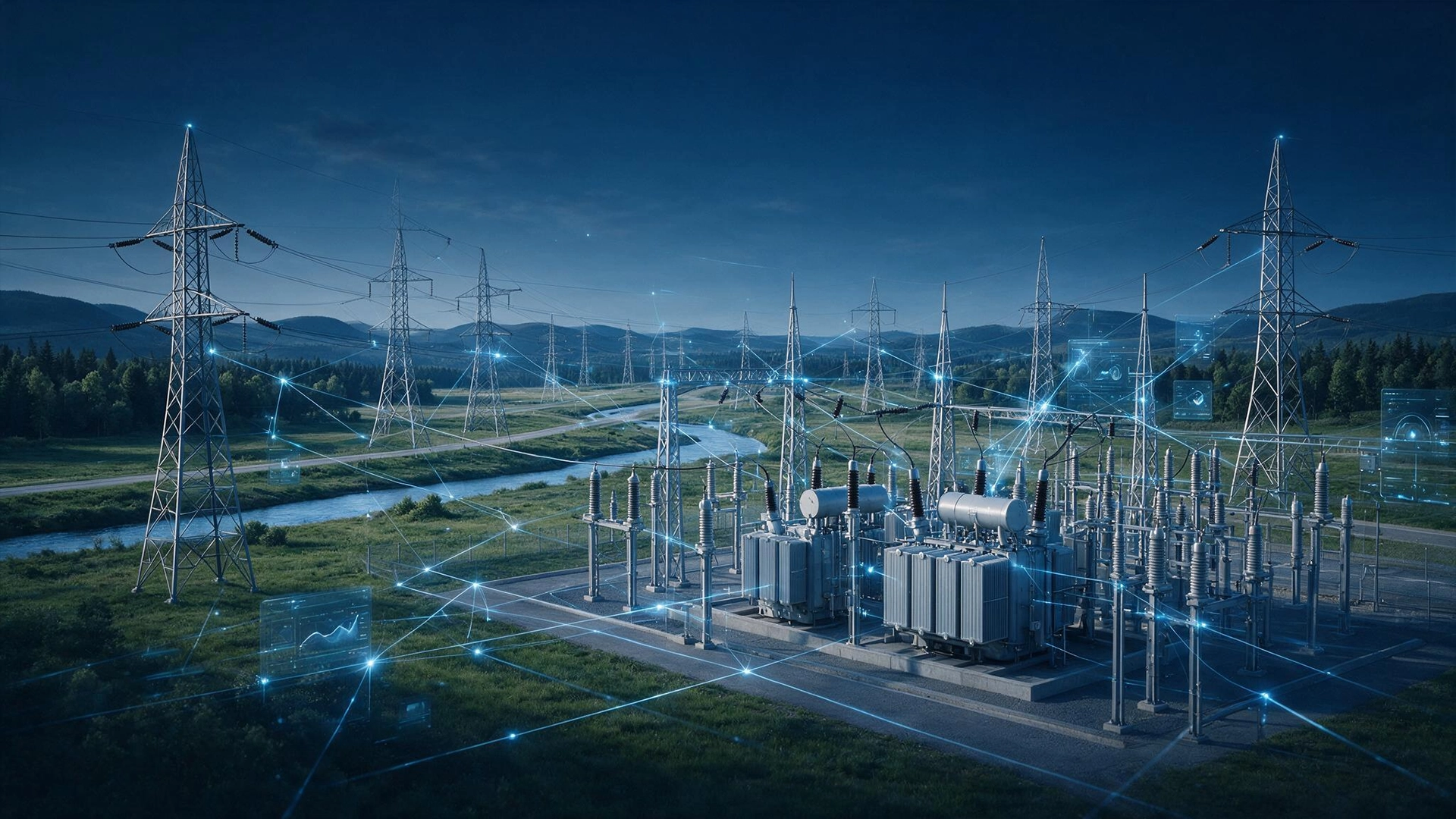

For decades, utility planning has largely centered on a straightforward assumption: when demand increases, new infrastructure follows.
That approach has supported generations of reliable service. But as AI, electrification, and large commercial loads accelerate demand growth, the industry is being forced to confront a new reality.
The challenge is no longer defined solely by how quickly new capacity can be built. It’s increasingly defined by how accurately existing capacity can be understood.
In many cases, utilities may not lack infrastructure. They may lack confidence in how much existing capacity can be safely and reliably utilized at any given moment.
As EPRI Vice President of Energy Supply Reliability Michael Caravaggio recently observed: “The challenge is not only building new capacity but ensuring that existing assets can deliver reliable and affordable power.”
That observation captures an important and underappreciated shift.
AI, Electrification, and the Need for Smarter Grid Operations
Across the industry, utilities face growing pressure to connect new loads, manage congestion, maintain reliability, and defer costly infrastructure investments wherever possible. Yet many operational decisions continue to rely on assumptions developed when real-time visibility into system conditions was far more limited than it is today.
Historically, conservative operating practices were both necessary and appropriate. When system operators lacked continuous awareness of asset conditions, weather impacts, and dynamic operating environments, conservative limits provided an essential margin of safety. Reliability demanded it.
But the operating environment has changed.
Today’s grid provides far greater operational visibility into asset conditions, environmental influences, and system performance than was possible even a decade ago. At the same time, AI-driven demand growth is compressing the timelines for decisions that have traditionally unfolded over years.
Why Operational Visibility Is the Key to Grid Capacity
As a result, a fundamental question is beginning to emerge across the industry: how much of the perceived capacity challenge is actually an information challenge?
When true operating capability isn’t fully understood, organizations naturally default to conservative assumptions. While those assumptions protect reliability, they can also obscure flexibility that may already exist within the system.
This is where the conversation begins to shift.
The next phase of grid modernization may not be defined by collecting more data. It may be defined by a more accurate understanding of existing system capability. The utilities gaining the greatest value from operational visibility aren’t simply gathering more information; they’re creating greater confidence in their understanding of asset limits, system conditions, and available capacity.
The Benefits of Asset Performance Management and Operational Intelligence
That confidence produces measurable outcomes:
- Enhanced reliability through greater situational awareness
- Improved utilization of existing infrastructure
- Better-informed operational decisions
- More defensible planning and investment decisions
- Reduced pressure for near-term capital expansion
None of these outcomes require utilities to abandon the principles that have guided the industry for decades. Reliability remains paramount. Risk management remains essential. Regulatory accountability remains unchanged.
What changes is the quality of information supporting those objectives.
Grid Modernization Starts with Better Information
As demand growth continues to accelerate, the industry’s most valuable resource may not be additional infrastructure alone. It may be the ability to understand existing infrastructure with greater precision than ever before.
Because ultimately, capacity isn’t just about what assets are installed. It’s about knowing, confidently and accurately, what those assets are capable of delivering. And in a grid that’s becoming increasingly dynamic, that confidence may prove to be one of the most important capabilities of all.
IPS Energy’s Asset Performance Management (APM) and Advanced Facility Ratings Management (AFRM) solutions are built to deliver exactly that confidence. By transforming raw asset and operational data into actionable, decision-ready intelligence, IPS Energy helps utilities move from reactive assumptions to proactive, precision-based grid management.
Learn more about IPS Energy’s Asset Lifecycle Management solutions